
Open help menu

Pricing

Information

Date & Time

Description

This presentation provides an update on collaborative initiatives between representatives of Division 19 (Bruce Crow and Scott Johnston) and Ukrainian psychologists and leaders. The collaboration goal is to advance military psychology practice, education, and research. This presentation highlights their recent trip to Ukraine where they delivered presentations, a jointly organized convention, and a newly launched research study. These initiatives offer a framework for discussing international knowledge exchange and its relevance to psychologists and other mental health professionals serving military service members, Veterans, and populations affected by war. The presentation will examine lessons from this collaboration and considerations for translating shared knowledge into culturally responsive clinical practice, professional education, and research. Diversity considerations will include the influence of language, national and military identity, cultural values, and belief systems on collaboration and mental health care, with attention to how mental health providers’ own backgrounds and assumptions may shape their understanding of Ukrainian colleagues and the military populations they serve.

Educational Goal

The educational goal of this workshop to is strengthen mental health providers’ ability to draw on lessons from collaboration with Ukrainian colleagues to inform military psychology practice, education, and research. Participants will develop greater awareness of how cultural context, military identity, and their own assumptions influence international knowledge exchange and culturally responsive work with military service members, Veterans, and populations affected by war.

Learning Objectives

Participants will be able to:

  • Describe two ways that collaborative initiatives with Ukrainian psychologists can inform military psychology practice, education, or research.

  • Identify two cultural or contextual factors relevant to collaboration with Ukrainian colleagues and explain how mental health providers’ own backgrounds and assumptions may influence culturally responsive work with military service members and Veterans.

  • Identify two considerations for adapting knowledge gained through international collaboration to clinical practice, professional education, or research with populations affected by war.

Target Audience

  • Addiction Professional
  • Counselor
  • Marriage & Family Therapist
  • Psychologist
  • Social Worker

Presenters

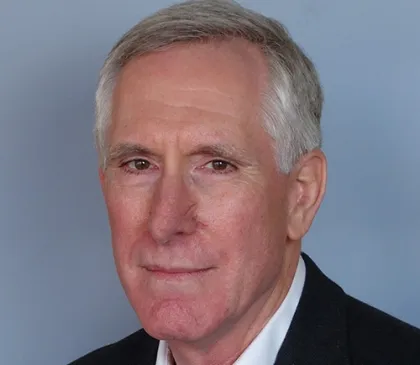
Bruce Crow, PsyD, MPH
Bruce Crow, PsyD, MPH, is a clinical psychologist, researcher, and retired Colonel in the U.S. Army with more than three decades of leadership in military behavioral health, suicide prevention, and health systems management. He completed thirty years of active military service, serving eight years as the U.S. Army's Chief Psychologist, directing the Warrior Resiliency Program, and later leading the civilian implementation of tele-behavioral health across the armed services. Following his military service, he served as Associate Director of Program Evaluation for the U.S. Department of Veterans Affairs Central Office Suicide Prevention Program. Dr. Crow has provided consultation on combat stress control and military mental health to the defense ministries of Australia, Colombia, Estonia, and Ukraine, and has served on joint DoD/VA clinical practice guideline committees for suicide prevention and post-traumatic stress disorder. He holds a Bachelor of Science in Biology from the University of Illinois, a Doctor of Psychology (PsyD) in Clinical Psychology from Nova Southeastern University, and a Master of Public Health (MPH) from the University of North Texas Health Science Center, alongside completed postdoctoral fellowships in clinical neuropsychology at Walter Reed Army Medical Center and in suicide prevention dissemination and implementation science at the University of Washington School of Medicine. Dr. Crow currently directs the Ukraine Collaboration Initiative for Division 19 (Society for Military Psychology) of the American Psychological Association, serves on the Intersectional Council Suicide Prevention Work Group for the American Public Health Association, and conducts independent research and consultation on military suicide risk mitigation.
Scott Johnston, PhD, ABPP
Scott Loucks Johnston, PhD, ABPP, is a licensed psychologist, board-certified clinical psychologist, and retired United States Navy Captain with over three decades of clinical, operational, and executive leadership experience in military behavioral health. He earned his Master of Science and Doctor of Philosophy in Clinical Psychology from Pacific Graduate School of Psychology and completed a postdoctoral fellowship in pediatric psychology at Harvard Medical School and Children’s Hospital Boston. During his 30 years of military service, Dr. Johnston served as carrier psychologist, presidential support psychologist, department head of mental health at Naval Health Clinic Pearl Harbor, force psychologist for Naval Special Warfare, and assistant director of the Naval Center for Combat & Operational Stress Control. He deployed multiple times to Iraq, the broader Middle East, Europe, and Cuba, overseeing operational stress programs, psychological screening, and post-combat decompression for returning service members. Currently the owner of Momentum Consultants, LLC, Dr. Johnston provides clinical and operational consultation to domestic and international organizations, including advising Ukrainian military psychologists on combat trauma, resilience, and transition initiatives. A Fellow of the American Psychological Association and President-Elect of the Society for Military Psychology, Dr. Johnston has authored numerous peer-reviewed articles and book chapters and lectured internationally on combat-related post-traumatic stress, psychological resilience, and military reintegration.

Financially Sponsored By

  • APA Division 19: Society for Military Psychology