Integrative Harm Reduction Psychotherapy (IHRP) Meets Motivational Interviewing (MI) Training
Integrative Harm Reduction Psychotherapy (IHRP) Meets Motivational Interviewing (MI) Training
Information
ISTI Ticket:
This ticket type allows attendees to apply continuing education (CE) hours toward the Certified Sexuality Counselor (CSC) and Certified Sex Therapist (CST) credentials, as well as the ISTI Certified Sex and Couples Therapist (CSCT) certification.
Date & Time
-
-
-
-
-
-
 Google
 Outlook.com
 Yahoo
Yahoo
Location
-
New Center for Psychoanalysis
2014 Sawtelle Blvd
Los Angeles, California 90025
Description
Participants will engage in a comprehensive overview of Integrative Harm Reduction Psychotherapy (IHRP), including its nine therapeutic tasks, and explore its relationship to Motivational Interviewing. Through lectures, role-plays, case examples, and discussion, participants will gain clinical grounding in IHRP, practical strategies for application, and a flexible framework for meeting clients wherever they are in their change process.
This Training Includes:
• An interactive, experiential guide through the skills and strategies of Motivational Interviewing (MI) and Integrative Harm Reduction Psychotherapy (IHRP)
• Learning activities and exercises designed to explore, re-think, and formulate counseling/conversational skills
• Exercises that include real-time demonstrations by trainers, “real-plays” with participants, video clips, small group exercises, with lots of opportunities for participants to practice and receive supportive feedback
• A focus on clarifying the personal, relational, and social meanings of problematic substance use
• A skills-building, cognitive-behavioral focus on positive behavior change that integrates relational, psychodynamic, cognitive-behavioral, and mindfulness strategies within a harm reduction frame
Participants will be able to:
• Reframe addictive and compulsive behaviors as meaningful, adaptive responses to suffering by identifying their core functions, rather than conceptualizing them as pathology or moral failure.
• Integrate harm reduction principles into their existing therapeutic orientation to strengthen alliance, reduce shame, and promote corrective emotional experiences.
• Apply practical strategies for working with substance use, urges, ambivalence, and risk without requiring abstinence or assuming an addiction-specialist role.
Learning Objectives
Participants will be able to:
-
Define Motivational Interviewing (MI) in its current form.
-
Name the 4 Fundamental Tasks of MI.
-
Define the acronym PACE in MI.
-
Demonstrate how to structure a conversation using OARS+I.
-
Give an example of a complex affirmation.
-
Distinguish between ambivalence, discord, & resistance in MI.
-
Identify one way to positively work with ambivalence.
-
Explain how to use Key Questions.
-
Identify the difference between Change Talk & Commitment Language.
-
Identify one way that IHRP and MI intersect.
Educational Goal
Target Audience
- Addiction Professional
- Counselor
- Marriage & Family Therapist
- Psychologist
- Social Worker
Presenters
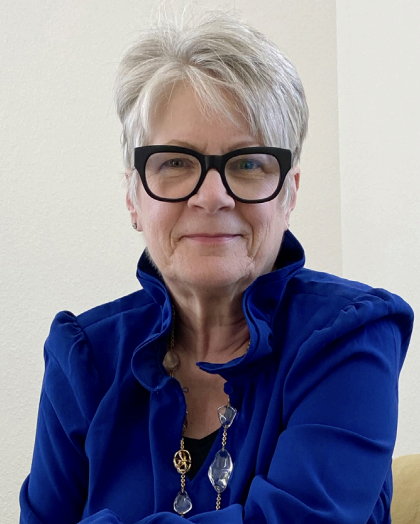
• Director, Dee-Dee Stout Consulting
• Adjunct Professor, The Wright Institute and University of San Francisco
Dee-Dee Stout holds degrees in Business Management, Psychology, Human Sexuality and a self-designed interdisciplinary Master’s degree in Health Counseling for Special Populations.
For nearly 25 years, Dee-Dee has been a member of the international Motivational Interviewing Network of Trainers (MINT) & is a founding member of the California Association of Harm Reduction Therapists (CAHRT; www.harmreductiontherapy.com). Dee-Dee has been on faculty at several Bay Area colleges and universities over the past 35 years. Currently, she is Adjunct Associate Professor at St. Mary’s College (Moraga, CA), teaching courses in Motivational Interviewing (MI), trauma-informed work, and substance use disorders using harm reduction psychotherapy strategies.
Dee-Dee has maintained a private practice serving individuals, couples, & families around addictions for close to 40 years. She specializes in helping folx examine their relationship to substances & to each other. Utilizing aspects of evidence-based practices such as harm reduction psychotherapy, MI, Emotionally Focused Family Therapy (EFFT), and more, Dee-Dee teaches families/couples ways to better communicate and connect to their loved ones who use substances. Finally, Dee-Dee offers Family Coaching, focusing on practical communication strategies such as using complex reflections and positive reinforcement to help all members communicate more effectively and encourage deeper understanding & compassion towards each other.
Dee-Dee has conducted more than 1000 workshops & trainings around the country in client-centered approaches such as MI, Harm Reduction Psychotherapy, and Solution Focused Therapy, and has keynoted many conferences and special events. She has received specialized training/certification in more than 13 other client-centered approaches including Emotionally Focused Family Therapy (EFFT), Tapping, and Brainspotting.
Well-known for bringing her openness & wicked sense of humor to all settings, the second edition of her ground-breaking book, “Coming to Harm Reduction Kicking & Screaming: Stories of Radically Loving People Who Use Drugs” recently dropped & is already receiving numerous positive reviews. Her original book remains a seminal work influencing people who use drugs and addiction professionals on how to bridge the gap between 12-Step and harm reduction.
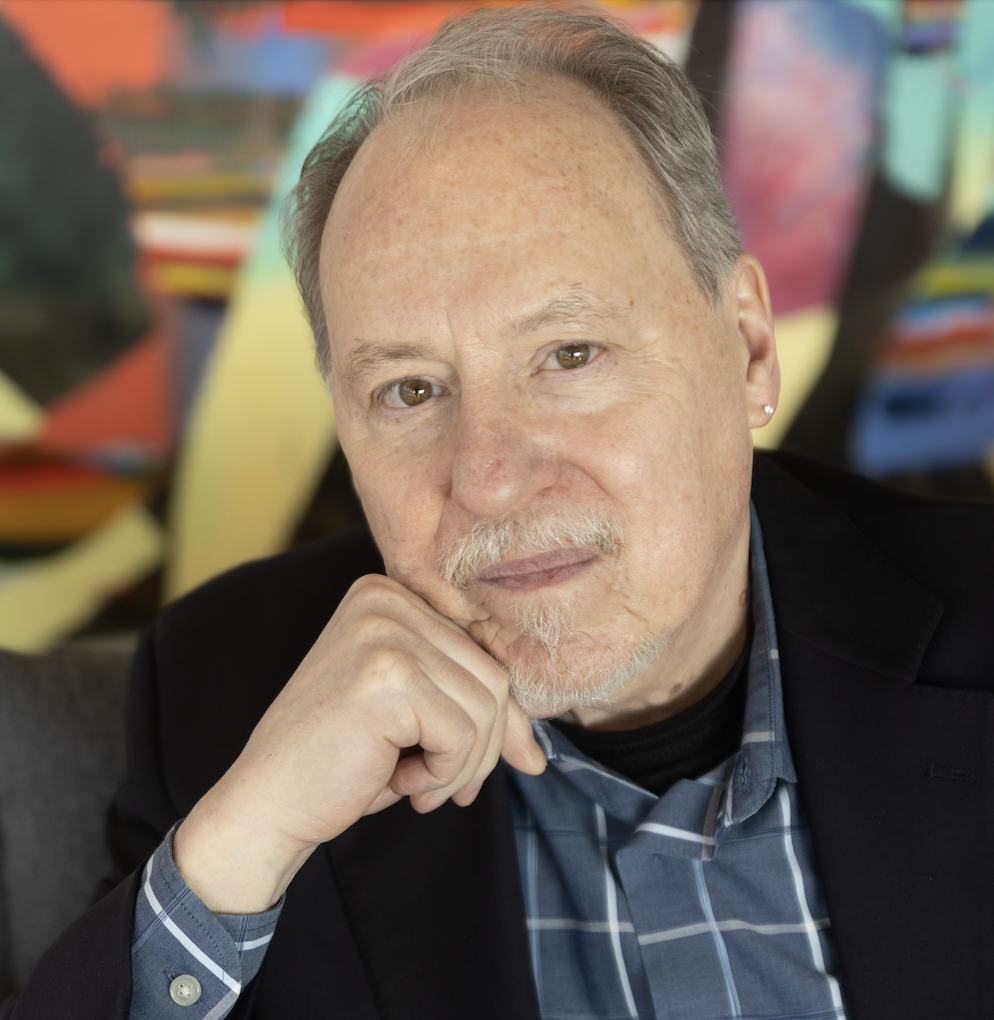
Andrew Tatarsky, Ph.D., has worked with people who struggle with drugs and their families for more than 40 years. He is the developer of Integrative Harm Reduction Psychotherapy (IHRP), a groundbreaking treatment model for the full spectrum of risky and addictive behaviors. IHRP integrates relational psychoanalysis, cognitive-behavioral therapy, and mindfulness within a harm reduction framework. This approach meets people wherever they are on their positive change journeys and supports them in discovering their truth, goals, and pathways toward healthier, self-directed change.
Dr. Tatarsky is the author of Harm Reduction Psychotherapy: A New Treatment for Drug and Alcohol Problems, which has been translated into Polish, Spanish, and Russian, as well as numerous scholarly papers. He earned his doctorate in clinical psychology from the City University of New York and completed postgraduate training in psychoanalysis and psycho-therapy at New York University.
Based in New York City, he maintains a private practice providing individual, family, and couples therapy, professional training, and organizational consultation. He is also Senior Advisor at Silver Hill New York, where he supervises, consults, and trains clinicians in harm reduction–informed treatment.
Previously, Dr. Tatarsky founded and directed the Center for Optimal Living, a pioneering treatment and training institute based on IHRP. He has trained individuals and organizations in more than 20 countries. Across his clinical work, teaching, writing, and leadership, he advocates for a re-humanized view of people who use drugs and promotes a harm reduction continuum of care that extends effective help to all who seek it, wherever they are ready to begin their journey of positive change.
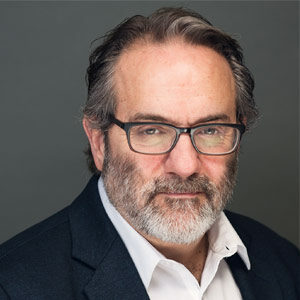
Dr. Ellenhorn has authored three books on human behavior: Parasuicidality and Paradox: Breaking Through the Medical Model (Springer Publishing, 2007) addresses psychiatric hospital recidivism and techniques for diverting hospital use; How We Change (and Ten Reasons Why We Don’t) (HarperCollins Publishers, 2020) takes a deep dive into the dynamics that influence all human change; and Purple Crayons: The Art of Drawing a Life, (HarperCollins Publishers, 2022) addresses play as a central and vital human activity in our modern times. He has authored numerous articles, gives talks and seminars throughout the country, and provides consultation to mental health agencies, psychiatric hospitals and addiction programs.
Dr. Ellenhorn is the founder of the Shifting The Paradigm conferences, a bi‐annual series that addresses humanistic and empowering changes in behavioral healthcare. He is the executive producer of the film, Recovering Addiction: A Public Health Rescue Mission, a documentary on new, less‐oppressive means for understanding problematic substance use and other distressing habits.
Dr. Ellenhorn is the first person to receive a joint Ph.D. from Brandeis University’s prestigious Florence Heller School for Social Welfare Policy and Management and the Department of Sociology.
Financially Sponsored By
- Resurface Group
- Ellenhorn